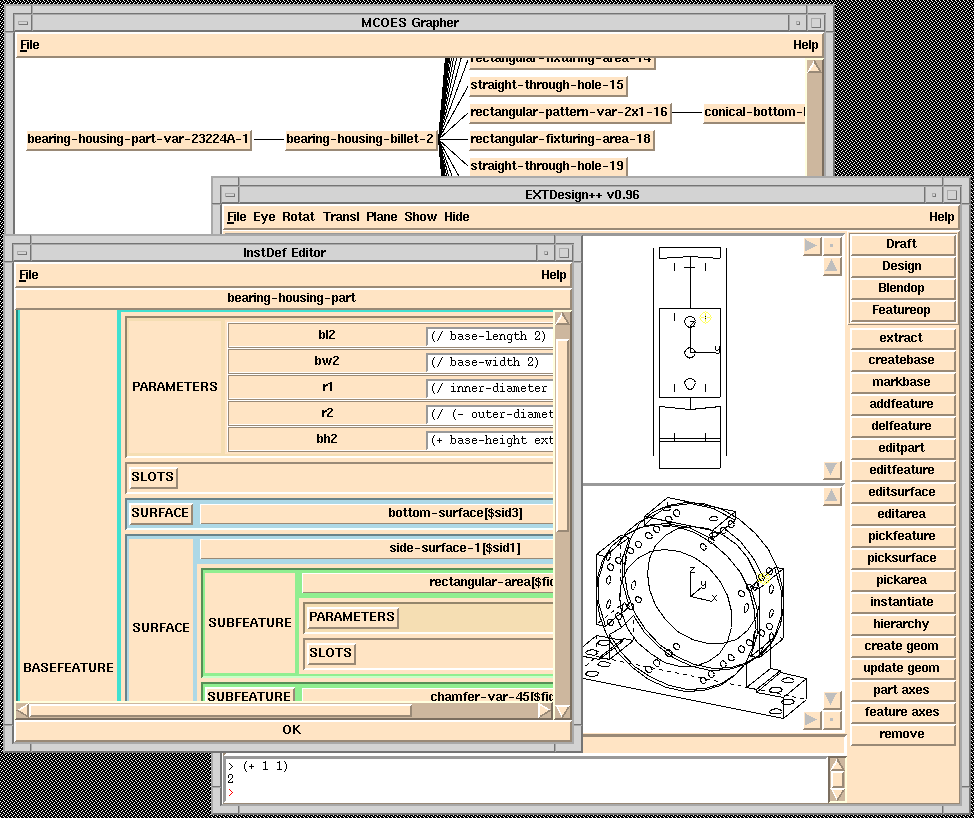
The core of EXTDesign++ system consists of various software components written in C++. In particular, the solid modeling core is based on the ACIS modeller. The feature types and instantiated feature models are represented internally by means of a C++ implementation of a LISP-style frame data structure. The frame system provides a class hierarchy of different types of frame entities such as instance and class frames, frame handlers, and frame relations.
Feature definitions and other basic data of the system can be entered, inspected, and manipulated through a LISP interface implemented by embedding a compact interpreter in the C++-based core. For this the freely available Elk extension language kit that implements the popular LISP dialect Scheme is used.
To handle user-defined features, the LISP interpreter is augmented with a procedure that translates the definitions to C++ data structures. This allows the system core to be implemented in C++. In particular, the facilities of ACIS can be accessed through feature geometry definitions embedded in frames.
In the modelling system, a mixture of design by features, incremental feature recognition, and solid modeling can be used to interactively model a part. Geometric constraints can be used to relate features appearing in a part with each other. A given part model can be turned into a parametric part family to support parametric design. For use in a process planning system, part models can be augmented with parametric process plan templates.
The benefits of the implementation architecture include (i) availability of full LISP for feature definitions, (ii) high run-time efficiency in the use of the definitions for feature instancing and manipulation, and (iii) good portability.